
The Problem:
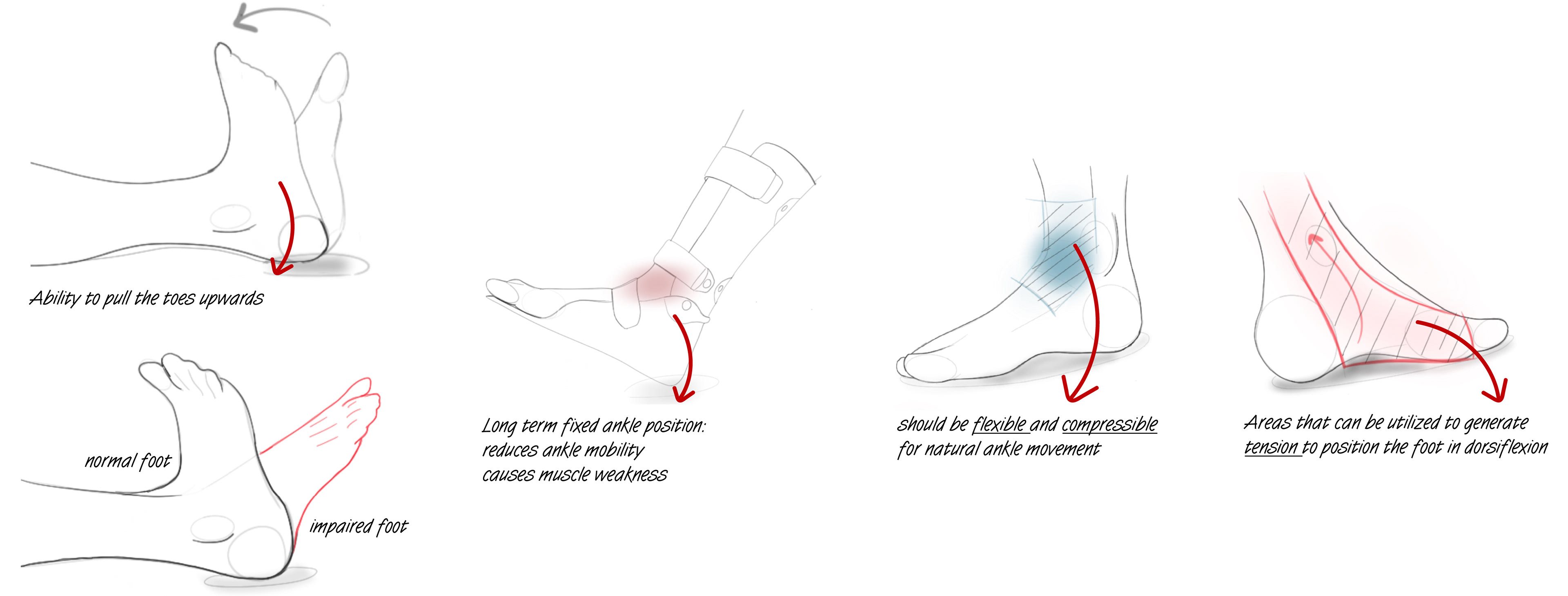
People with dorsiflexion impairments, foot drop, muscle weakness, rely on ankle-foot orthoses to keep the foot steady. AFOs do that job well. But they do it by holding the ankle in a fixed position, and over months of daily wear that stillness has a cost: the surrounding muscles weaken and the joint loses mobility.
The device manages the symptom while quietly deepening the underlying condition.
Auxetix started from that contradiction. What would ankle support look like if it preserved movement rather than removing it?
The structure: a lattice tuned to the ankle
Think of a resistance band: stretch it lengthways and it narrows across its width. Almost every conventional material behaves this way. Auxetic structures don't, they expand in both directions at once, tuned by the geometry of the pattern.


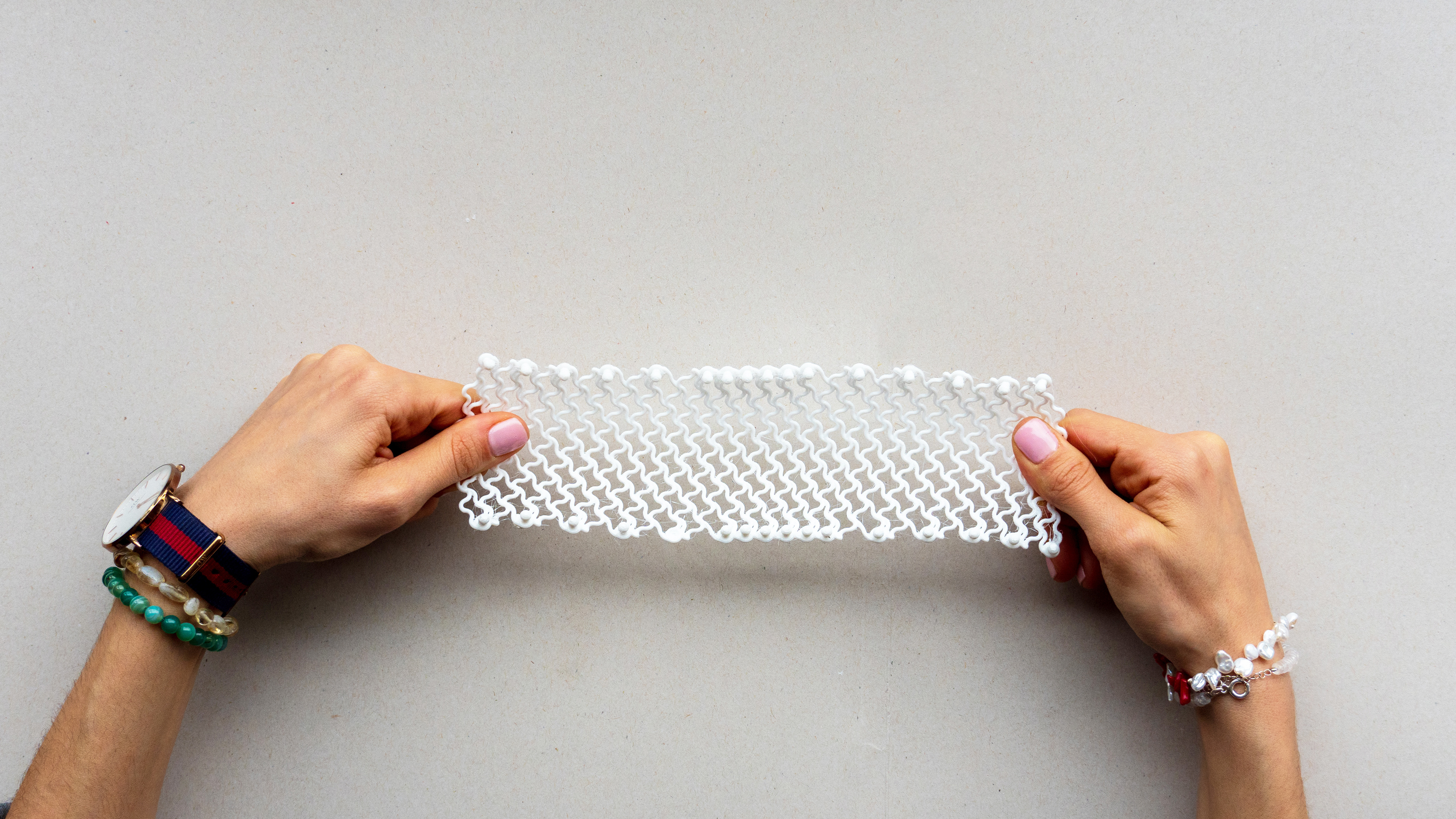
Horseshoe lattices, one variation on auxetic geometry, behave much like human skin, which made them a natural starting point. But a standard lattice isn't tuned to any particular joint, and an ankle needs support in one direction and freedom in the other.
I reworked the pattern around the mechanics of the foot and ankle: firm resistance where the foot would otherwise drop, and largely free movement everywhere else.
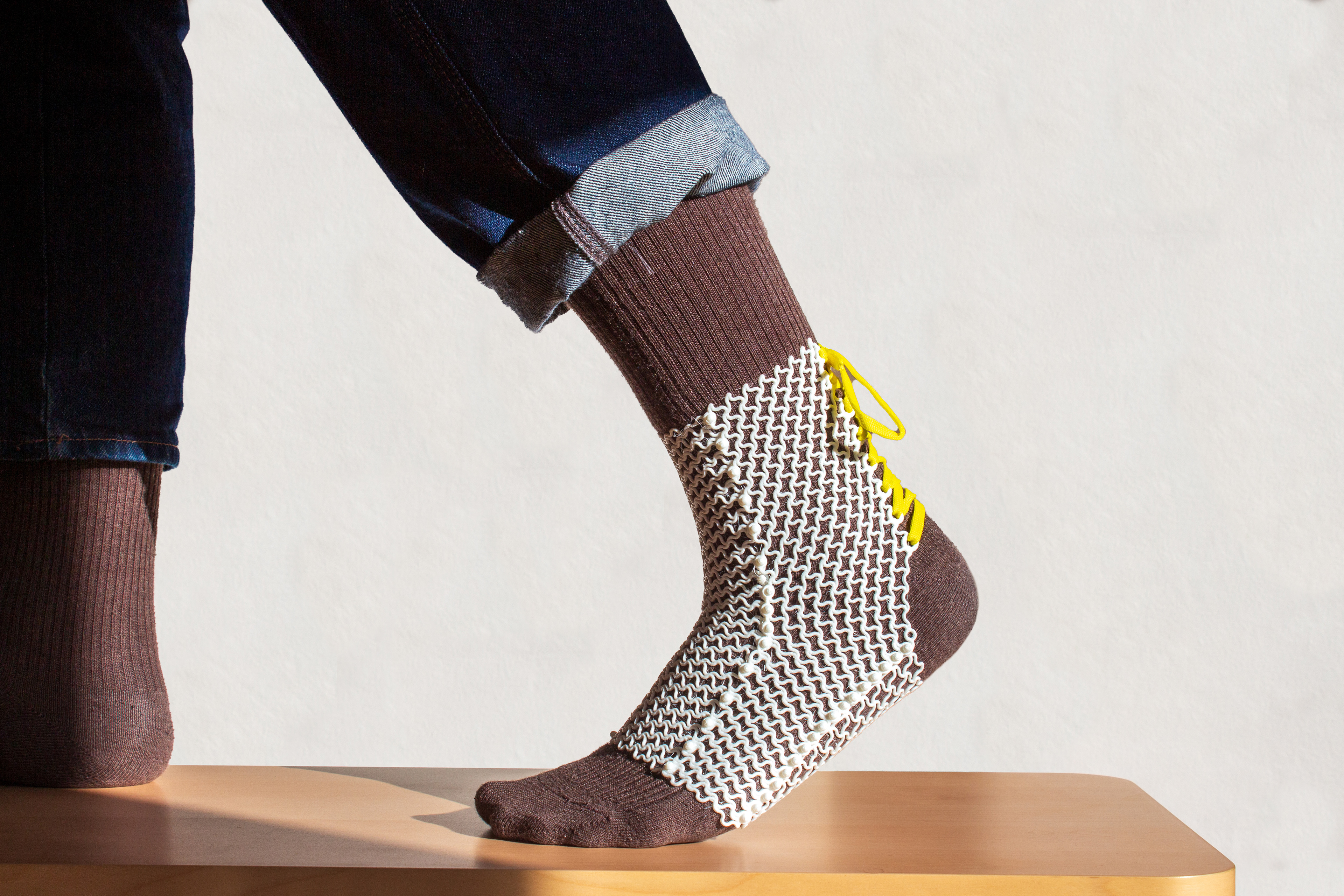
The ankle is guided, not locked.
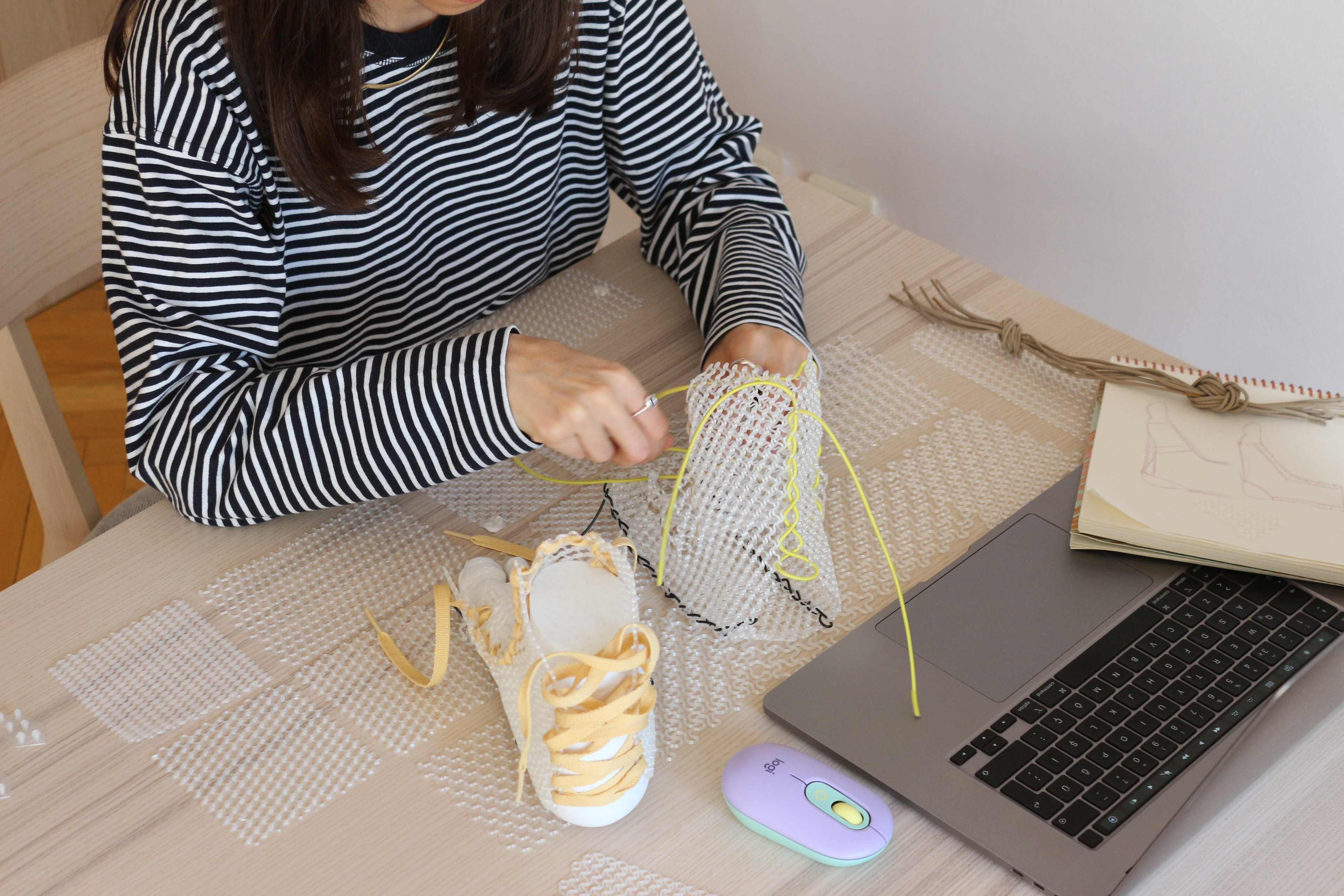

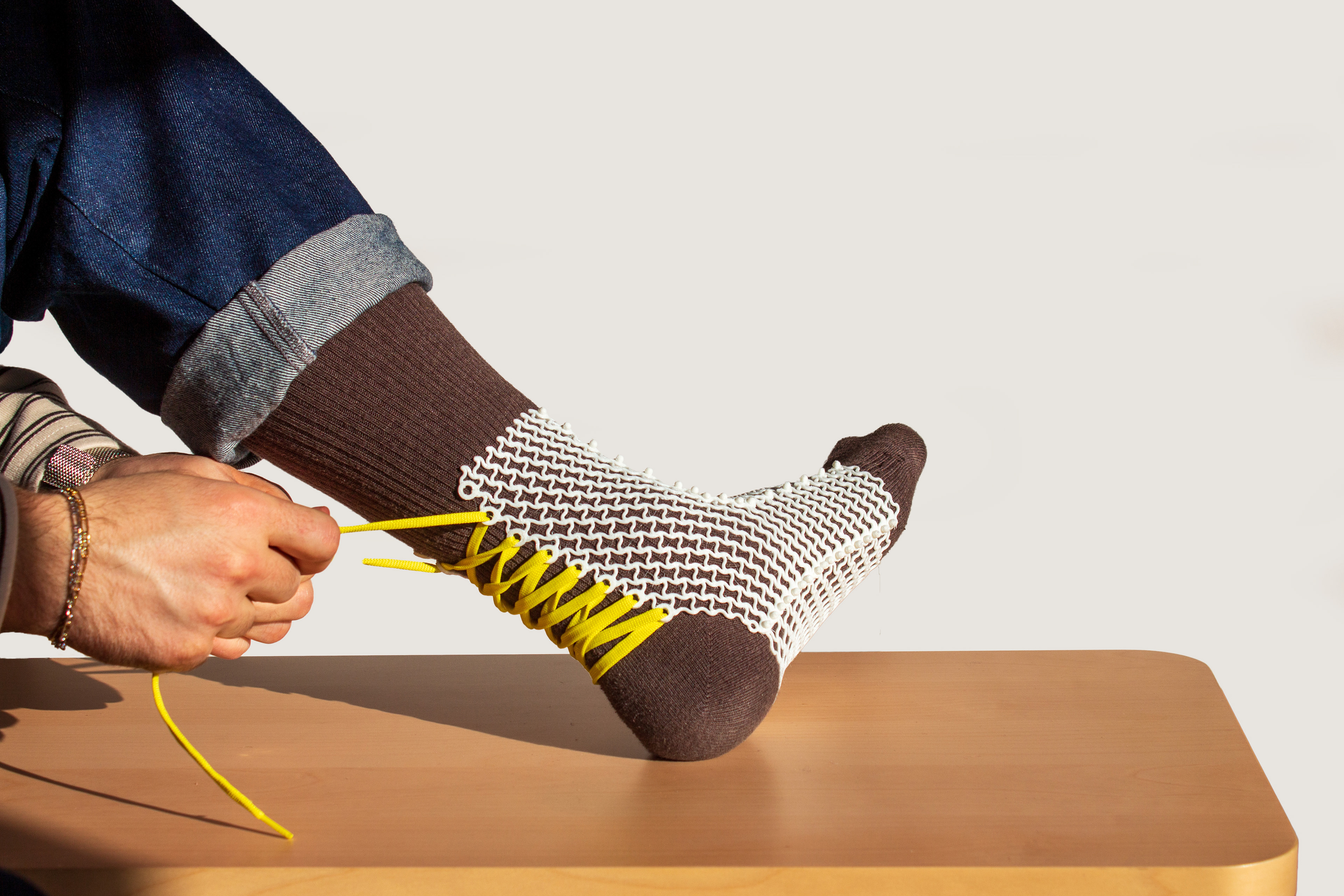


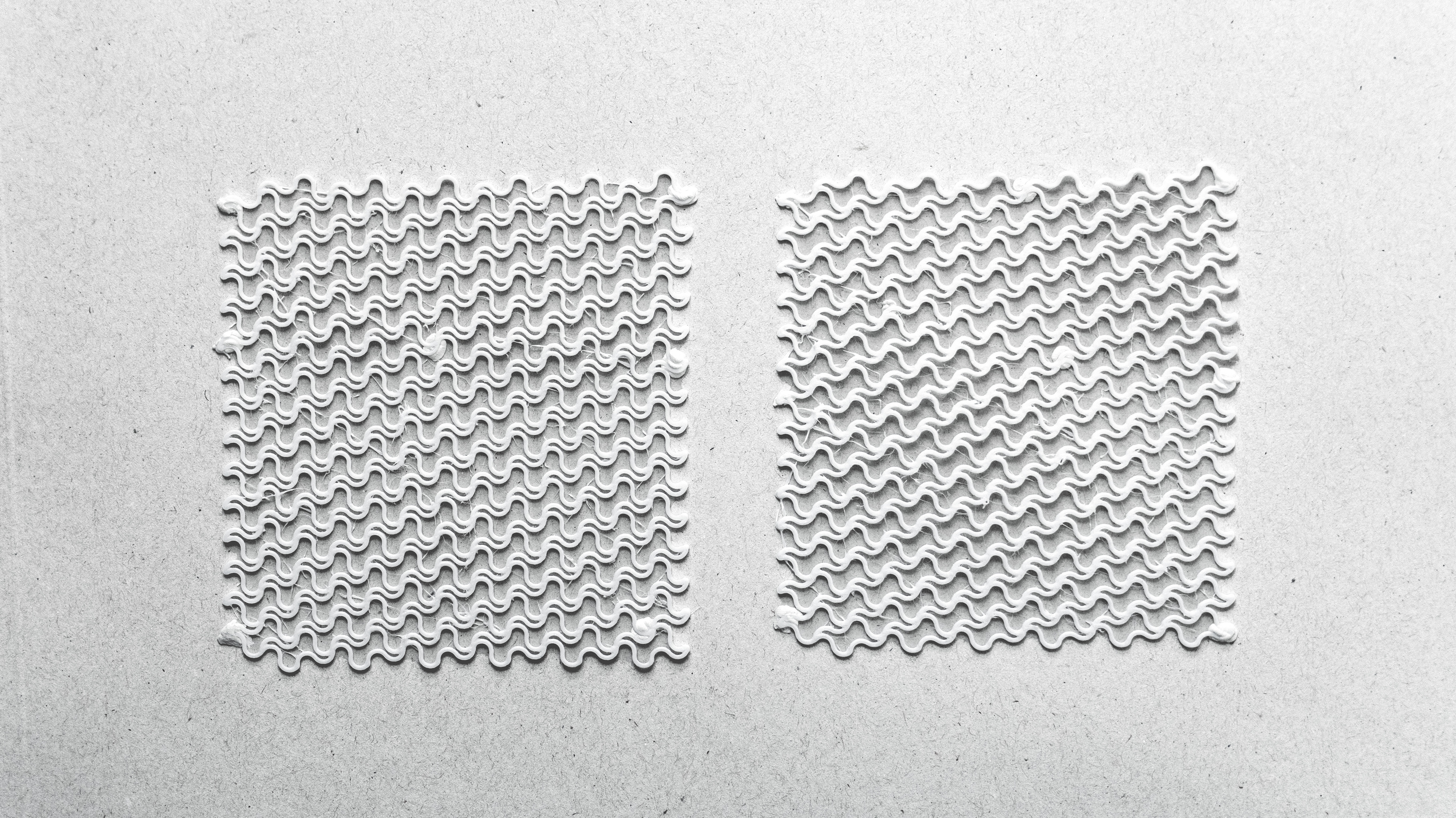
Made from TPU and 3D-printed, Auxetix is fully customizable in size, thickness, and curvature to adapt to different rehabilitation stages. Grasshopper is used to fine-tune the design for precision and user-specific needs. The left-side module has a higher curvature, enhancing flexibility while providing less support, whereas the right-side module has a lower curvature, offering greater support.
As a patient's condition changes, the brace can be re-tuned and reprinted to match the stage they've reached. Dimensions, colour and lacing style are all customisable, because an assistive device is worn in public, and how it looks is not a minor concern.
An assistive brace for everyday wear, one that supports the ankle attentively while leaving the wearer free to move.
